Atlanta Siding Contractor for Rot Repair, Hardie Siding & Historic Homes
Atlanta is hard on siding. About 50 inches of rain a year, humid summers with dew points near 70°F, and a thick tree canopy keep walls shaded and damp, sometimes for weeks. Wood lap siding rots at the bottom courses. Hardboard from the '80s swells and comes apart. Vinyl gets green with algae and orange with red clay splash. Atlanta Siding & Exterior Renovation replaces, repairs and upgrades siding for homeowners and landlords across the metro. Before any new cladding goes up, we find and fix the moisture damage behind the old siding.
A big share of our work is on intown bungalows in Grant Park, Kirkwood and East Atlanta. On those homes, keeping the original wood profiles and trim matters as much as stopping the rot. We also work on Tudor-era houses in Druid Hills and Avondale Estates and on postwar ranches in Candler-McAfee, Belvedere Park and Decatur. Every job starts with an honest assessment. Then you get a written plan that fits your budget, whether that's a $900 sill repair or a full fiber cement re-side.
- ✓Bonded
- ✓Fully insured
- ✓Financing available
- ✓Serving a 20-mile radius around Atlanta
- ✓Moisture and rot repair before new siding goes on
- ✓Historic profile matching for intown bungalows
- ✓Gutter work available
Request Your Free Estimate
No obligation. Fast, honest quotes.
Thank you — your request was sent!
A member of the Atlanta Siding & Exterior Renovation team will reach out shortly. Need help now? Call (470) 828-2705.
Why Atlanta Homes Need a Siding Contractor Who Knows the Local Climate
Siding fails differently in Atlanta than it does in Phoenix or Minneapolis. Our heat, humidity, shade, red clay, termites and storms each attack exterior walls in their own way. Our housing ranges from 1890s Victorians to new infill, and most of it sits under a patchwork of permit and historic rules.
Humidity, Shade, Storms and Red Clay
Atlanta has a humid subtropical climate. Rain falls in every season, about 50 inches a year in total, and July highs run near 89–90°F with dew points in the upper 60s to low 70s. Shaded north walls under oak and pine canopy can stay damp for days after a storm. That's when mildew, algae and rot set in wherever paint cracks or a caulk joint opens. Spring and summer thunderstorms bring gusts that can unzip vinyl panels, hail that dents aluminum, and falling limbs. Leaf-clogged gutters overflow and push water behind the cladding. Georgia's kaolinite red clay swells and shrinks with moisture, which opens gaps at corners and trim and stains the lower courses orange. Subterranean termites, along with Formosan termites in parts of the Southeast, go after any wood siding or sheathing that sits too close to the soil.
A Century of Building Eras, Each With Its Own Weak Points
Inman Park, Grant Park, Cabbagetown, Candler Park and West End still have Victorian, Queen Anne and Craftsman homes with old-growth wood lap siding, shingle gables and exposed rafter tails, and most of them have lead paint. Mill houses in East Point, Hapeville, College Park and Scottdale were often covered with asbestos-cement shingles or aluminum between the 1940s and '60s. Postwar ranches in Brookhaven, Chamblee, Belvedere Park and Candler-McAfee usually pair brick below with hardboard or wood above. Many 1980s–90s homes still have class-action Masonite or LP Inner-Seal siding. Atlanta's 1990s EIFS houses became known for trapped moisture. Newer infill in Smyrna, Vinings and Ormewood Park mostly uses James Hardie lap and board-and-batten.
Permits, Historic Review and HOA Approvals
Georgia enforces the state-adopted International Residential Code with amendments. Permits are handled locally by the City of Atlanta Office of Buildings, DeKalb and Fulton Counties, and cities including Decatur, Brookhaven, Smyrna and East Point. A full re-side, or any work that touches sheathing or framing, often needs a permit. Simple like-for-like repairs often don't. In Atlanta's historic districts, including Inman Park, Grant Park, Cabbagetown, West End and the Atlanta side of Druid Hills, exterior material changes usually need a Certificate of Appropriateness from the Urban Design Commission. DeKalb, Decatur and Avondale Estates run their own reviews. Pre-1978 homes fall under EPA lead-paint (RRP) rules. Asbestos siding has to be removed and disposed of under Georgia EPD and EPA rules. HOAs in Smyrna, Vinings and Brookhaven often have to approve colors and profiles before work starts.
A Market That Ranges From Historic Restoration to Budget Repairs
Our customers want different things. Owners in Druid Hills, Morningside and Avondale Estates usually care most about historic accuracy and premium fiber cement or real wood. Kirkwood, East Atlanta and East Point see a lot of full re-sides with modern profiles for resale. In Panthersville, Forest Park and Belvedere Park, many owners are seniors or rental landlords who need targeted repairs, vinyl options and financing. Across the metro, buyers' home inspections keep flagging hardboard and EIFS, so many owners have to fix siding quickly before a closing date.
Common Siding Problems We Find on Atlanta Homes
Most siding calls in Atlanta come down to the same handful of problems. They're caused by moisture, old materials and storms. Here's what each one looks like, why it shows up so often here, and how serious it usually is, so you can tell a quick fix from a problem that's spreading behind the wall.
Failing Hardboard and Composite Siding (Masonite, LP) Serious
Hardboard and early composite siding is made from pressed wood fibers and resin. Once water gets past the paint, the boards swell, mushroom at the bottom edges, delaminate and rot. Products like Masonite and LP Inner-Seal were the subject of national class-action lawsuits.
Why it's common hereThousands of 1980s and '90s subdivision homes around Atlanta were sided with these products. They hold up only as long as the paint film is intact, and in Atlanta's humidity that film breaks down fast at drip edges, butt joints and lower courses near wet clay. Buyers' inspectors know these products on sight, so failing hardboard often turns up as an urgent repair demand during a home sale.
Signs you'll notice- Swollen, puffy lower edges on boards
- Flaking or peeling at board ends
- Visible wafer or fiber pattern under paint
- Boards breaking up around nails
- Rot at the bottom course near grade
- A home inspection report flagging 'hardboard siding'
Common in 1980s–90s neighborhoods across Smyrna, Chamblee, North Druid Hills and outer DeKalb, and on second stories of 1970s split-levels in Brookhaven and Belvedere Park.
Our fix: Usually a full replacement with fiber cement such as James Hardie or with engineered wood. Isolated boards can be swapped if the damage is limited and you're keeping the house short term.
Asbestos-Cement Shingles Under or Around Old Siding Serious
Asbestos-cement shingles were a cheap, fireproof cladding from the 1940s–60s. They're stable when intact. Cracked, drilled or broken shingles can release fibers, and removing them has to follow regulated procedures.
Why it's common hereAtlanta's mill houses and postwar ranches were often re-clad in asbestos-cement shingles, and many were later covered over with aluminum or vinyl. Homes in East Point, Hapeville, College Park, Scottdale and Candler-McAfee frequently still have them, either exposed or hidden under a newer layer. Lead paint is often under them too. Removal and disposal fall under Georgia EPD and EPA rules, so DIY or casual removal isn't an option.
Signs you'll notice- Rigid, brittle shingles about 12x24 inches
- Wavy or stippled surface texture
- Nail holes near the bottom edge of each shingle
- Cracked or broken corners
- A second layer visible behind aluminum or vinyl
- Home built roughly 1940–1970
Most often on mill-village bungalows in East Point and Hapeville, ranch homes in Candler-McAfee and Panthersville, and rental properties in Scottdale and Forest Park where earlier owners covered the shingles instead of removing them.
Our fix: Regulated removal and disposal under Georgia EPD and EPA rules. Then we inspect the sheathing, install new housewrap, and put up fiber cement or vinyl siding.
Storm, Hail and Falling Limb Damage Emergency
High winds lift and unlock vinyl panels. Hail dents aluminum and cracks brittle vinyl. Falling limbs puncture siding and trim. Any opening lets wind-driven rain into the wall during the next storm.
Why it's common hereMetro Atlanta gets severe thunderstorms every spring and summer, with damaging gusts, occasional hail and periodic tornado warnings. Leftover tropical systems add wind-driven rain. Our mature oaks and pines drop big limbs in those storms. After a major storm, out-of-town storm chasers show up, so homeowners need a local contractor who'll still be here for warranty questions.
Signs you'll notice- Missing or flapping vinyl panels
- Cracked or holed panels after hail
- Dented aluminum siding or trim
- Punctures where limbs hit
- Loose J-channel around windows
- Water stains inside after wind-driven rain
Heavy-canopy neighborhoods like Druid Hills, Candler Park, Morningside-Lenox Park and Belvedere Park take the most limb damage. Exposed hilltop ranches in Panthersville and Forest Park see more wind-stripped panels.
Our fix: We tarp or temporarily seal open walls first. Then we document the damage with photos for your insurance claim and repair or replace the panels, matching color and profile where we can.
Rotted Wood Siding, Sills and Gable Trim on Historic Homes Moderate
Old-growth wood lap siding, shingle gables, window sills and fascia rot where paint has failed and water has pooled. Original material is irreplaceable, so the goal is to repair what can be saved and replace only what has to go.
Why it's common hereVictorian and Craftsman homes in Inman Park, Grant Park and Kirkwood are 100 years old or more. They've been through decades of Atlanta humidity, termite pressure and red clay splashback. Historic district rules usually require in-kind wood repair, and vinyl over original wood is commonly denied. Lead paint is typical on these homes, which adds RRP requirements to even small jobs.
Signs you'll notice- Soft wood at the lowest two or three courses
- Rotted window sills and drip caps
- Crumbling exposed rafter tails
- Gaps or splits in gable shingles
- Peeling paint that keeps coming back
- Termite mud tubes near the foundation
Concentrated in Inman Park, Grant Park, Cabbagetown, Candler Park, West End, Virginia-Highland and Oakhurst in Decatur. Damage is worst on north-facing walls and on porches near grade.
Our fix: We cut out rotted sections and fit new wood milled to match the original reveal and profile, then prime all sides. The work is designed to pass historic design review.
EIFS (Synthetic Stucco) Moisture Damage Serious
EIFS is a foam-and-finish exterior system that looks like stucco. Older barrier-type EIFS has no drainage plane, so water that gets in through cracks or window joints stays trapped against the sheathing.
Why it's common hereAtlanta built a lot of EIFS-faced homes in the 1990s and 2000s, and the region became one of the best-known examples of EIFS moisture failures. With our rainfall, every failed sealant joint around a window becomes a leak. Many owners now remove the EIFS completely and switch to fiber cement, often after a moisture probe or inspection report.
Signs you'll notice- Cracks at window corners
- Stains streaking down from windows or rooflines
- Bulging or soft spots in the stucco
- Rotted trim next to the EIFS
- High moisture readings on an inspection report
- Mold or odor in interior wall cavities
Common on larger 1990s–2000s builder homes in Brookhaven, Vinings, Smyrna and the Chamblee area. It often comes up when the house is listed or a buyer orders a moisture inspection.
Our fix: Full EIFS removal, sheathing repair, new weather barrier and flashing, then fiber cement lap, panel or board-and-batten styled to suit the house.
Mildew, Algae, Red Clay Staining and Heat-Warped Vinyl Minor
Green or black growth on shaded walls, orange-red stains on lower courses, and wavy or buckled vinyl panels. These problems are mostly cosmetic, but they can point to deeper ones like poor drainage or bad installation.
Why it's common hereConstant shade, high dew points and frequent rain keep Atlanta walls ideal for algae. Kaolinite red clay splashes up wherever there's bare soil or a short drip line. Summer sun of around 90°F, and reflected light from low-E windows next door, can warp dark or low-grade vinyl. So can panels that were nailed too tight to expand.
Signs you'll notice- Green film on north or shaded walls
- Black mildew spotting
- Orange staining on bottom courses
- Wavy, rippled or buckled vinyl panels
- Panels that won't slide when pushed
- Fading on sun-facing walls
Heavily shaded lots in Druid Hills, Avondale Estates and Belvedere Park get the most growth. Warped vinyl often shows up on tight infill lots in East Atlanta and Smyrna where neighbors' windows reflect sun onto the wall.
Our fix: Gentle cleaning, regrading or gutter fixes for clay splash, and reinstalling panels so they can expand. Where problems keep coming back, we may suggest factory-finished fiber cement such as Hardie ColorPlus.
Siding Services for Atlanta Homes and Buildings
We install, repair and replace nearly every kind of siding used in metro Atlanta. That includes historic wood, Hardie fiber cement and vinyl for landlords and budget-focused owners. The right material depends on your house's age, how much shade and moisture it gets, any historic or HOA rules, and your budget. We'll explain the trade-offs plainly.
Siding Replacement & Full Siding Installation ⭐ Specialty
We tear off old siding and repair any rotted sheathing or framing underneath. Then we install a new weather-resistive barrier, window and door flashing, kick-out flashing, and new cladding on the whole house.
Our approachTear-off happens one wall at a time to limit exposure. We take moisture readings, photograph the damage, and repair it before new siding goes up. Clearances above grade and roofs meet code and manufacturer requirements, so your warranty stays valid.
In Atlanta, GAThis is our most common job on 1980s hardboard homes in Chamblee and Smyrna, EIFS houses in Brookhaven and Vinings, and investor renovations in Kirkwood and East Point. It's also where hidden Atlanta rot usually comes out, which is why we write plans that account for it.
Best for: Homes with failing hardboard, EIFS or aluminum, pre-sale inspection repairs, and owners who want one long-term fix instead of years of patching.
Fiber Cement, James Hardie, Hardie Plank & Hardie Board Installation ⭐ Specialty
We install James Hardie lap siding (HardiePlank), panels (HardieBoard), shingles and trim, plus other fiber cement products, with factory-primed or ColorPlus baked-on finishes.
Our approachWe follow Hardie's installation instructions closely. That means proper WRB, flashing, kick-out flashing, gapping, required clearance above grade and roofs, blind or face nailing per spec, and cut edges sealed and handled so the warranty holds up.
In Atlanta, GAFiber cement doesn't feed termites, it shrugs off humidity, and smooth-face profiles are sometimes approved in Atlanta and Decatur historic districts. It's the default for infill in Ormewood Park and Smyrna, and it's the usual replacement when owners remove EIFS.
Best for: Shaded, damp lots, termite-prone foundations, EIFS and hardboard replacement, and owners who want low maintenance and strong resale value.
Siding Repair Services
We do targeted repairs: replacing storm-damaged panels, rotted lower courses, cracked boards and failed sections, and resealing joints, without re-siding the whole house.
Our approachWe find where the water is getting in before patching anything. Then we match profile, exposure and color, and tie new pieces into the existing weather barrier and flashing so the repair doesn't become the next leak.
In Atlanta, GAIdeal for storm and limb damage in Druid Hills and Belvedere Park, rental turnovers in Forest Park and Scottdale, and inspection repairs that need to be done before a closing date.
Best for: Budget-conscious owners, landlords, insurance claims, and homes where most of the siding is still sound.
Vinyl Siding Installation
We install insulated and standard vinyl siding in lap, Dutch lap, shake and vertical styles, including matching soffit, J-channel and trim.
Our approachWe hang panels loose so they can expand in Atlanta's 90°F summers, leave correct gaps at channels, and choose heat-resistant colors and grades for sunny walls.
In Atlanta, GAA practical, affordable choice for postwar ranches in Candler-McAfee, Panthersville and College Park, and for rentals where upkeep has to stay low. It's usually not suitable over historic wood in design-review districts.
Best for: Price-sensitive projects, rental properties and ranch homes outside historic districts.
Wood, Cedar & Cedar Shake Siding Installation
We install and repair real wood lap, drop siding, cedar clapboard and cedar shake, including custom-matched profiles for older homes.
Our approachWe back-prime boards, use stainless or hot-dipped fasteners, keep proper clearance above grade, and mill replacement pieces to match historic reveals.
In Atlanta, GAEssential for Victorian and Craftsman homes in Inman Park, Grant Park and Candler Park where Urban Design Commission or Decatur review calls for in-kind wood. Cedar shake also suits gable accents on Druid Hills homes.
Best for: Historic district homes, gable shingle repair, and owners who want authentic natural wood.
Board and Batten, Vertical & Modern Siding Installation
We install board-and-batten exteriors, vertical panel siding and modern mixed-material facades in fiber cement, engineered wood or metal.
Our approachVertical systems need furring and drainage details that differ from lap siding. We lay out batten spacing around windows so the finished elevation looks deliberate rather than pieced together.
In Atlanta, GAThis is the modern-farmhouse look you see on infill in Kirkwood, East Atlanta and Smyrna. It also works well for updating dated 1970s ranches in Brookhaven and Ashford Park.
Best for: Renovations, new additions, accent walls and owners who want a contemporary exterior.
Engineered Wood Siding Installation
We install treated engineered wood lap and panel siding. It's lighter than fiber cement, has a wood look and costs less.
Our approachWe seal cut ends, keep the required clearance from grade and roofs, and paint promptly so the coating protects the boards from Atlanta humidity.
In Atlanta, GAA good mid-budget replacement for failing 1980s hardboard in DeKalb subdivisions, as long as the lot isn't constantly wet or shaded.
Best for: Hardboard replacement on a budget and owners who want a wood look without the upkeep of real cedar.
Metal & Aluminum Siding Installation
We install steel and aluminum siding and repair or remove the aluminum siding that's common on Atlanta homes from the 1950s–70s.
Our approachWe check what's under old aluminum before tearing it off, because asbestos or lead-painted wood is often hiding there. New metal is installed with matched trim and expansion allowances.
In Atlanta, GAOld aluminum on East Point and Hapeville bungalows often comes off to reveal wood worth restoring. Modern steel panels work well as accents on contemporary infill.
Best for: Hail-resistant accents, modern designs and removing old aluminum.
Stone Veneer Siding Installation
We install manufactured stone veneer on foundation skirts, wainscots, chimneys and entry accents.
Our approachWe use proper lath, a drainage layer and weep screeds so trapped moisture doesn't repeat the EIFS problem behind the stone.
In Atlanta, GAPopular for hiding exposed block foundations on sloped Atlanta lots and for adding curb appeal to Smyrna and Vinings homes, subject to HOA approval.
Best for: Foundation cover-ups, curb appeal upgrades and mixed-material facades.
Soffit, Fascia & Exterior Trim Installation
We replace rotted fascia, soffits, rake boards, corner boards, window and door casing and frieze trim. Gutter work is available too.
Our approachWe use PVC, fiber cement or primed wood trim based on exposure. Vented soffits help attics breathe, and we make sure fascia and gutters shed water away from the walls.
In Atlanta, GAOverflowing, leaf-clogged gutters rot fascia across Atlanta's tree-covered neighborhoods. Exposed rafter tails on Craftsman bungalows need careful matching.
Best for: Rotted rooflines, pest entry points and finishing new siding projects.
Asbestos Siding Removal and Replacement
We handle removal and disposal of asbestos-cement shingle siding under Georgia EPD and EPA rules, then install new siding.
Our approachThe shingles are wetted, removed whole where possible, wrapped and disposed of following regulations. Then we inspect the sheathing and repair it before re-siding.
In Atlanta, GACommon on mill houses and ranches in East Point, Hapeville, Scottdale and Candler-McAfee, often hidden under aluminum.
Best for: Homes built roughly 1940–1970 with cement shingle siding, and owners getting ready to sell or renovate.
Siding Inspection and Consultation
We walk the exterior, probe suspect areas, check flashing and clearances, and give you an honest written assessment with repair or replacement options.
Our approachWe take moisture readings, photograph the problem areas, and lay out the options by priority so you know what's urgent and what can wait.
In Atlanta, GAUseful before buying or selling, after storms, and for historic homeowners preparing a Certificate of Appropriateness application.
Best for: Buyers, sellers, owners responding to an inspection report and anyone unsure whether to repair or replace.
Mobile Home Siding Replacement
We replace damaged or dated siding and skirting on manufactured homes.
Our approachWe use lightweight vinyl or metal suited to manufactured-home framing and seal penetrations carefully.
In Atlanta, GAFor manufactured-home owners across the southside and DeKalb portions of our 20-mile service area.
Best for: Storm repair and full exterior refreshes on manufactured homes.
Commercial Siding Installation
We re-side apartments, townhome communities, condos and small commercial buildings.
Our approachWork is phased by building to keep units occupied, with scheduling that works around tenants and staging planned for tight sites.
In Atlanta, GAGarden-style complexes along the Buford Highway corridor, in Clarkston and in Smyrna often need large-scale hardboard or vinyl replacement.
Best for: Property managers, HOAs and landlords with multiple units.
How Your Atlanta Siding Project Works
No surprise invoices and no guessing. Here's what happens from the first visit to the final walkthrough. That includes what we do when hidden rot turns up, which is common on Atlanta homes.
On-Site Inspection & Honest Assessment
- Walk every elevation and probe suspect areas
- Check flashing, gutters, grade clearance and termite signs
- Identify materials, including possible asbestos or hardboard
- Talk through your goals, budget and timeline
Local note: We look closely at north walls, low courses and roof-wall joints, which are where Atlanta humidity and red clay do the most damage.
Written Plan & Transparent Estimate
- Line-item scope with material options
- Clear pricing for likely sheathing repair
- Repair-versus-replace recommendation
- Financing options explained if you want them
Local note: Hidden rot is common here, so we tell you upfront how we'll price it if it turns up.
Permits, Historic Review & HOA Approvals
- Confirm permit needs with your city or county
- Prepare material specs for Certificate of Appropriateness applications
- Submit HOA architectural review packets
- Order materials and schedule the crew
Local note: Atlanta UDC, DeKalb, Decatur and Avondale Estates reviews run on their own timelines, and HOAs in Smyrna and Vinings can add time too.
Tear-Off, Repair & Installation
- Protect landscaping, windows and neighbors' property
- Remove old siding wall by wall
- Photograph and repair rotted sheathing or framing
- Install housewrap, flashing and new siding and trim
Local note: On tight intown lots we plan dumpster and staging space early. We also watch the forecast for afternoon thunderstorms so walls are never left open.
Final Walkthrough & Cleanup
- Walk the finished exterior with you
- Fix any punch-list items
- Magnetic sweep for nails and full debris haul-off
- Provide product and warranty paperwork
Local note: We check that grade clearance and gutter discharge will keep red clay and runoff away from the new siding.
Why Atlanta Homeowners Choose Atlanta Siding & Exterior Renovation
We Fix the Rot Before We Cover It
Putting new siding over wet, rotted sheathing just hides the problem until it shows up again inside your walls. In Atlanta's climate, hidden moisture damage is the rule, not the exception. On every tear-off we check the sheathing, framing and sill plates, photograph what we find, and repair it properly before installing a new weather barrier and flashing. You'll see the damage yourself and get a clear explanation of what it adds to the job, so nothing gets quietly covered up and nothing gets charged without your sign-off.
Real Local Expertise, Neighborhood by Neighborhood
A Grant Park Victorian, a Belvedere Park ranch and a Brookhaven EIFS house need completely different approaches. We work across intown Atlanta and the DeKalb and southside cities every week. We know which areas fall under Urban Design Commission or Decatur historic review, where mill houses usually hide asbestos shingles under aluminum, and which 1980s subdivisions were built with failing hardboard. That local knowledge leads to better recommendations, fewer surprises and plans that actually get approved.
Careful Work on Historic and Older Homes
Owners in Kirkwood, East Atlanta, Grant Park and Druid Hills want their homes to keep their original character. We repair what's salvageable, replace only what has to go, and match original reveals, drop siding profiles, shingle gables and trim details. When a house sits in a design-review district, we put together the material information the review board needs. Fiber cement may be approved case by case, and we'll tell you honestly when wood is the better choice.
Bonded and Insured on Every Job
Siding work means ladders, staging, tear-off debris and open walls, often on tight intown lots just feet from a neighbor's house. We're bonded and insured, which protects you and your property if something goes wrong. Ask for proof of coverage before you sign with any contractor. After a big storm, plenty of out-of-town crews knock on Atlanta doors without it. We're glad to provide ours.
Honest Assessments and Plans That Fit Your Budget
Not every house needs a $35,000 re-side. Sometimes a few boards, a new kick-out flashing and gutter repairs will do. We'll tell you when repair makes more sense than replacement, rank the work by urgency, and give you material options at different price points, from vinyl to James Hardie. Landlords, sellers facing an inspection deadline and long-time homeowners all get the same straight answers.
Financing Available
Big exterior projects rarely line up neatly with your savings, especially when a buyer's inspection report or a storm forces the timing. We offer financing so you can take care of rot, failing hardboard or asbestos siding now instead of letting the damage spread. We'll go over the options during your estimate so you can compare them before deciding.
Full Exterior Scope in One Crew
Siding rarely fails by itself. Rotted fascia, clogged gutters, open soffits and failed window trim are usually part of the same problem. We handle siding, soffit and fascia, exterior trim, stone veneer accents and gutter work together. That way water management is designed as one system, and you're not juggling three contractors with three schedules.
Bonded, Insured and Local to Metro Atlanta
Atlanta homeowners and landlords come to us for straight answers. We tell them what's actually wrong behind their siding, what it will cost to fix, and which work can wait.
Bonded • Insured • Financing available
Siding Service Areas Across Metro Atlanta
We work within a 20-mile radius of Atlanta, from historic intown districts to DeKalb's postwar neighborhoods and the southside cities near the airport. Each area has its own housing stock and its own permit office, and we work with all of them regularly.
Intown Atlanta & Historic East Side
North Corridor & Northwest Suburbs
South Metro & DeKalb Communities
We serve properties within roughly 20 miles of central Atlanta. If you're near the edge of that radius, contact us and we'll confirm whether we cover your address. Not sure if we cover your area? Call (470) 828-2705.
How Much Does Siding Cost in Atlanta?
Siding prices in Atlanta vary a lot. A small rot repair might be under $1,000, and a full EIFS-to-Hardie conversion can run well past $50,000. These are the factors that drive the number, along with realistic ranges for common local projects.
Material Choice Primary Factor
Vinyl is the most affordable option, typically around $5–$9 per square foot installed in metro Atlanta. Engineered wood is in the middle. Fiber cement like James Hardie usually runs about $10–$16 per square foot installed, and more with ColorPlus finishes or complex trim. Real cedar and custom-milled historic wood cost the most. Profile matters too. Board-and-batten, shake and mixed-material modern facades take more labor than plain lap siding.
Hidden Rot and Structural Repair Primary Factor
In Atlanta's humidity, rotted sheathing, framing or sill plates often turn up only after tear-off. Replacing sheathing usually adds a few dollars per square foot over the affected areas, and sill-plate or framing repairs are priced by the section. We spell out how we'll price these repairs in your estimate before work starts, so a mid-job discovery doesn't turn into a mid-job shock.
Removal of Existing Siding Major Factor
Tearing off a single layer of vinyl or hardboard is straightforward. Removing EIFS takes much more labor. Asbestos-cement shingles have to be removed and disposed of under Georgia EPD and EPA rules, which adds meaningful cost. Two layers, such as aluminum over asbestos, mean more labor and disposal fees. Lead-safe work practices on pre-1978 homes also affect labor time.
House Size, Height and Lot Access Moderate Factor
Two-story homes, steep sloped lots, crawlspace foundations and narrow intown lots all need more staging, scaffolding and labor. In some jurisdictions, putting a dumpster in the right-of-way requires a permit. A split-level in Ashford Park and a tight lot in Cabbagetown can cost noticeably more per square foot than a flat-lot ranch.
Trim, Permits and Approvals Moderate Factor
Soffit and fascia replacement, window and door trim, kick-out flashing and gutter work add to the scope but help the job last. Permit fees vary by city and county. Historic review and HOA applications add mostly time, plus some cost for documentation and any specific materials the board requires.
| Typical project | Details | Estimated range |
|---|---|---|
| Rot repair on a Kirkwood Craftsman bungalow | Replace lower courses on one elevation, two window sills and a section of fascia with wood milled to match the original profile, primed and painted | $1,800 – $5,500 |
| Vinyl re-side on a Belvedere Park ranch | About 1,200 sq ft of upper-wall siding over a brick base, tear-off of old hardboard, new housewrap, soffit and trim | $9,500 – $16,000 |
| Hardboard to James Hardie on a Chamblee two-story | About 2,400 sq ft of wall, 1980s hardboard tear-off, some sheathing repair, HardiePlank with trim and kick-out flashing | $26,000 – $45,000 |
| EIFS removal and fiber cement conversion in Brookhaven | About 3,500 sq ft of wall, full EIFS removal, sheathing and framing repair, new WRB, Hardie lap and panel with ColorPlus finish | $50,000 – $95,000 |
Financing is available, so you can deal with urgent rot, storm damage or a buyer's inspection deadline now and pay over time. Ask about options during your estimate. New siding is one of the more reliable exterior investments in Atlanta's market. It removes inspection red flags like hardboard and EIFS, cuts down on recurring paint and rot repairs, and makes a strong first impression for buyers.
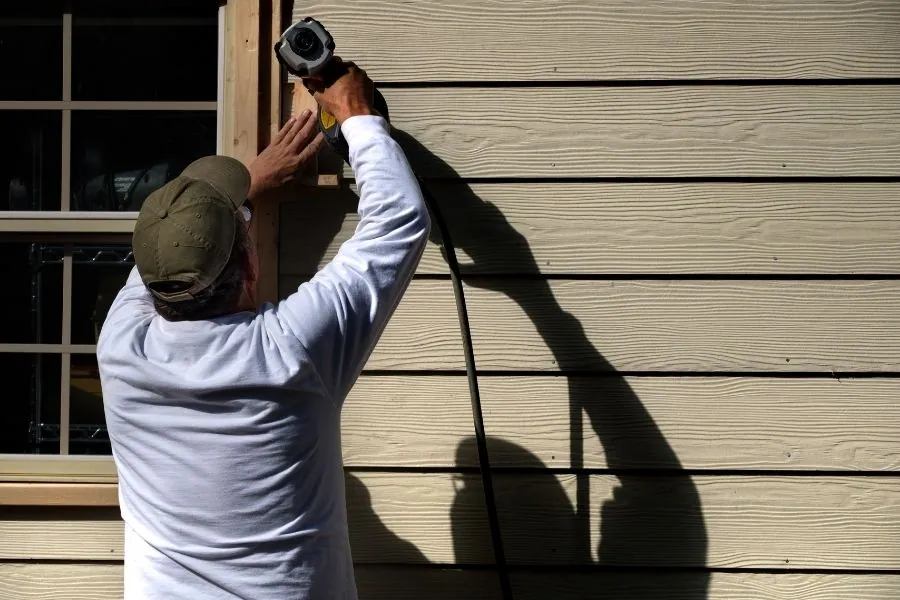
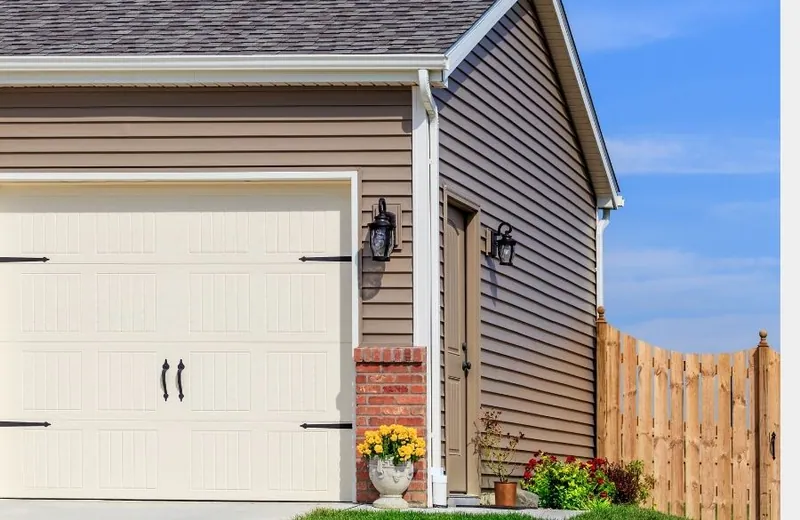
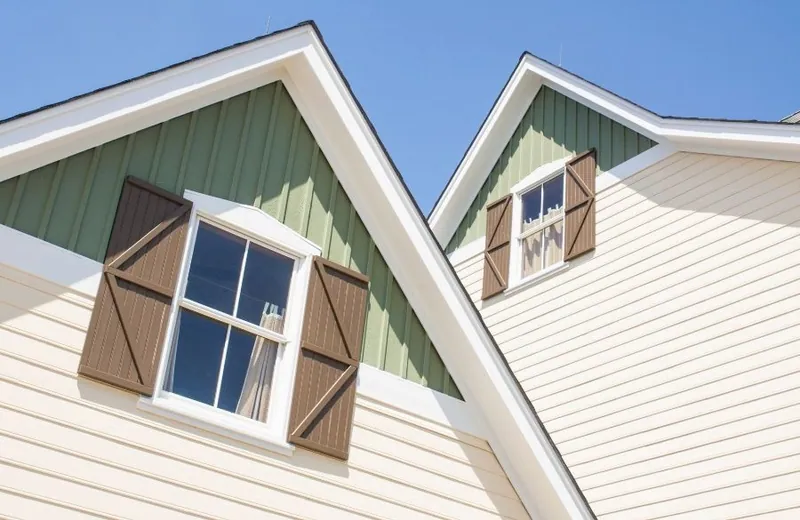
Recent siding Projects in Atlanta, GA
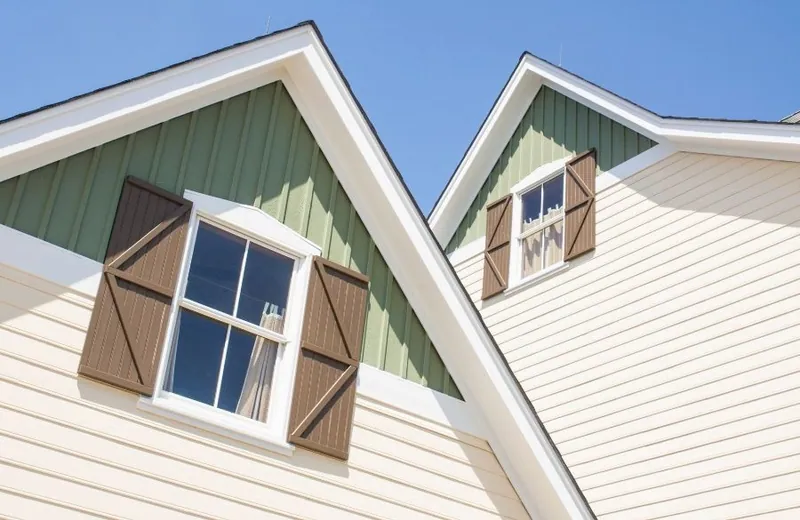
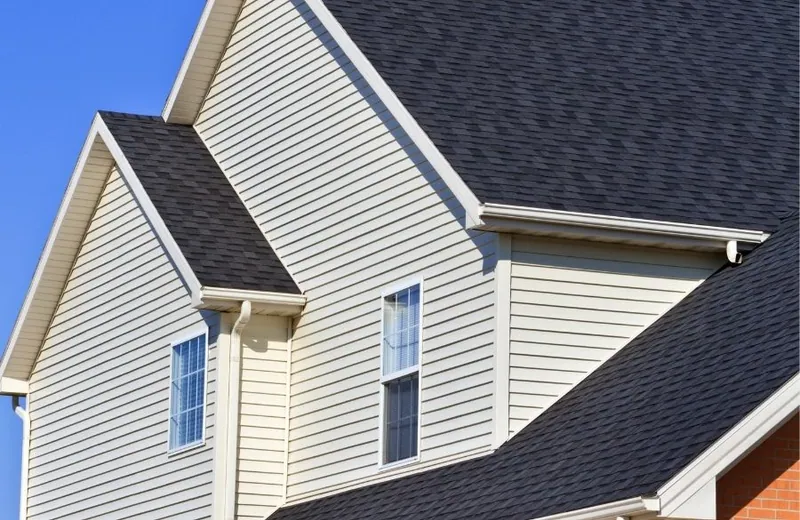
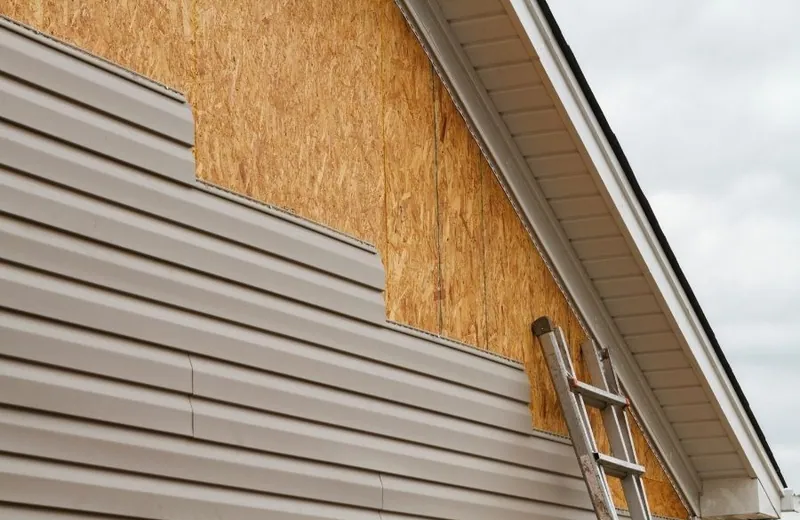
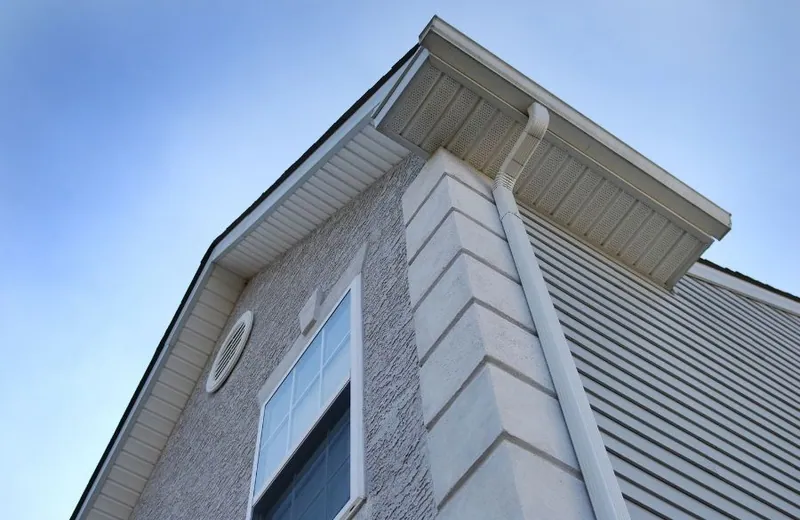
Atlanta Siding FAQs
How much does it cost to replace siding on a house in Atlanta?
Most full siding replacements in metro Atlanta fall somewhere between about $10,000 and $45,000. Large homes and EIFS conversions can go higher. A one-story ranch in vinyl sits at the low end. A two-story home in James Hardie fiber cement with new trim usually lands in the $25,000–$45,000 range. Removing asbestos or EIFS, repairing rotted sheathing, steep lots and historic detailing all push the price up. Small repairs often cost $600–$5,000. We give you a line-item estimate after inspecting the house, including how we'll price any hidden rot, so you can compare options honestly.
How long does a siding replacement take?
A typical single-family re-side takes about one to three weeks of on-site work once materials are delivered and approvals are in hand. Repairs usually take one to three days. Atlanta's afternoon thunderstorms can cost us a few hours here and there, and significant rot behind the siding adds repair time. The bigger wildcard is often before the work starts. Permits, historic Certificates of Appropriateness and HOA reviews can take anywhere from a few days to several weeks depending on your jurisdiction. We'll give you a realistic schedule upfront.
Do I need a permit to replace siding in Atlanta or DeKalb County?
Often, yes. A full re-side, or any job that involves replacing structural sheathing or framing, commonly needs a building permit from the City of Atlanta Office of Buildings, DeKalb or Fulton County, or your city, such as Decatur, Brookhaven, Smyrna or East Point. Simple like-for-like repairs are frequently exempt, but the rules vary by jurisdiction, so we confirm them for every project. If your home is in a historic district like Inman Park, Grant Park, Druid Hills, Decatur or Avondale Estates, exterior material changes usually need design review approval too.
Can I put vinyl or Hardie siding on a house in a historic district?
Usually not vinyl. Atlanta's Urban Design Commission and the DeKalb, Decatur and Avondale Estates review boards generally expect original wood siding to be repaired or replaced in kind, and vinyl over historic wood is commonly discouraged or denied. Fiber cement may be approved case by case, typically in a smooth-face profile that matches the original reveal. Our recommendation is usually to repair as much original wood as possible and mill matching replacement boards for the rest. That's often the approach most likely to get approved and the best way to keep your home's value.
How can I prevent siding rot and mildew in Atlanta's climate?
Keep water moving away from your walls. Clean gutters at least twice a year, more often under heavy oak or pine canopy, and make sure downspouts discharge well away from the foundation. Keep soil, mulch and pine straw several inches below the bottom of the siding to limit rot, termites and red-clay splash. Recaulk failed joints around windows and trim, and repaint wood before the paint cracks. Trim back branches so shaded walls can dry. If you're re-siding, fiber cement with a factory finish and proper kick-out flashing removes many of the usual failure points.
When should I repair siding instead of replacing it?
Repair makes sense when the damage is limited to a few areas, such as one storm-hit wall, a couple of rotted sills or a handful of cracked panels, and the rest of the siding is sound and still available to match. Replacement is usually smarter when you have failing hardboard or composite siding, EIFS with moisture problems, widespread rot, asbestos shingles you want gone, or a home sale coming up where the siding will be flagged. Our inspection gives you both options with costs so you can decide.
When is siding damage an emergency?
Act right away if panels have blown off, a limb has punched through the wall, or you can see sheathing or housewrap. The next Atlanta thunderstorm can drive water straight into the wall cavity. Also act quickly on soft spots that spread, interior water stains on exterior walls, or termite mud tubes near siding. Cracked or broken asbestos shingles shouldn't be disturbed. Leave them alone and have them assessed. For storm damage, take photos before anything is moved, and we'll help secure the opening and document it for your insurance claim.
What should I do if a home inspection flagged my siding before a sale?
Call early, because closing deadlines move fast. Inspectors in metro Atlanta commonly flag hardboard siding, EIFS, wood rot at lower courses and missing kick-out flashing. We'll inspect the flagged areas, tell you whether a targeted repair will satisfy the buyer or whether replacement makes more sense, and give you a written scope you can share with the buyer's agent. Financing is available if the repair cost lands at an inconvenient time.
Serving Atlanta, GA & Nearby
Get an Honest Siding Assessment for Your Atlanta Home
Rot, failing hardboard and storm damage don't fix themselves, and Atlanta's humidity makes them spread faster. Schedule an inspection and get a clear, written plan you can act on.
- ✓A thorough on-site inspection of every elevation, including flashing, gutters and grade clearance
- ✓An honest repair-versus-replace recommendation, not a sales pitch
- ✓A line-item estimate with material options from vinyl to James Hardie
- ✓Rot and moisture damage repaired before new siding is installed
- ✓Help with permits, historic review and HOA approval packets
- ✓A bonded and insured crew with full cleanup and debris haul-off
- ✓Financing available for larger projects
⚡ Storm or tree damage that left a wall open? Call us, and we'll help secure the opening and document the damage for your insurance claim.
Bonded • Insured